
World Trip Diary #5: Hiking in Cappadocia and last day in Türkiye
The last stop on our tour of Türkiye was the world-famous Cappadocia. We spent two days hiking and exploring the main sights around Göreme and Uçhisar. On our last day in Türkiye, we travelled to its capital, Ankara, to have a quick look around before catching our flight to our next country, Azerbaijan.
· by Krisztofer & Dávid · 8 min read
Why Cappadocia?
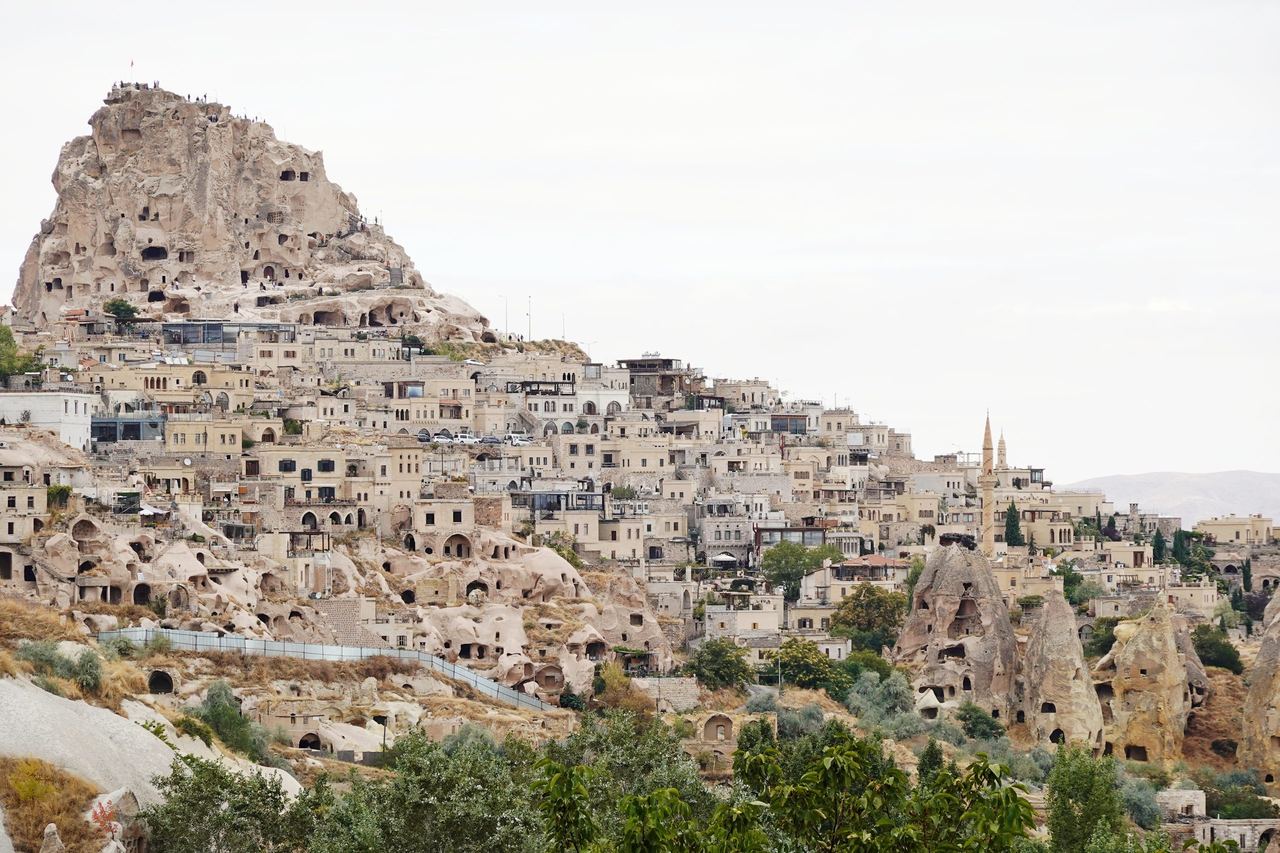
Cappadocia is located almost in the middle of Türkiye and is an entire region rather than a single town. Its most important and central towns are Göreme and Uçhisar. The region is famous for its rock formations, shaped by ancient volcanic activity and millennia of erosion, as well as centuries of human presence. The formations themselves are entirely natural, but local people have made use of the valleys for agriculture and carved the porous rock into cave houses, churches, temples, and even entire castles.
Arriving in Uçhisar
We headed there by bus again, which took almost 10 hours from Antalya. We arrived in Uçhisar in the evening, home to the highest point in Cappadocia: its castle. Our hotel was a real delight, the complete opposite of our accommodation in Antalya. It was clean, comfortable, well-equipped, and conveniently located. They even served breakfast, included in the price.
Obviously, we couldn’t resist going for at least a little walk on our first evening, so we headed up to the foot of Uçhisar Castle. It is actually a huge rock with an entire castle carved into it. The views were amazing, and we couldn’t wait to eventually visit the top.
Pigeon Valley, Göreme, and Love Valley
The next day, we woke up early, before sunrise, with high hopes of watching the hot air balloons take off and fill the sky over Cappadocia. This is by far the most popular activity in the region, but it is weather-dependent, and as we found out, around one-third of flights are cancelled due to bad weather. We had already noticed in the days before that the weather probably wouldn’t be suitable for a flight, and unfortunately, we were right. We went up to the foot of the castle and waited until sunrise, but not a single balloon appeared in the sky. It was cloudy and still a bit misty until around 9 AM, when we finally sat down for breakfast.
After our filling Turkish breakfast, we set off on our first hike through Pigeon Valley (Güvercinlik Vadisi). The trail starts at the southern end of Uçhisar and leads all the way to Göreme. It was around 4 kilometres long, mostly downhill through the valley. The valley gets its name from the pigeon nests carved into the rock walls. The valley floor was once fertile thanks to the pigeons, and was extensively used for farming. Nowadays, there are still a few smaller gardens, but mostly wild apple, quince, and plum trees grow here, along with plenty of grapevines. The highlight of the trail, however, is right at the beginning, where we enjoyed a stunning view of Uçhisar Castle. As we hiked through the valley, we barely met anyone apart from a few fellow hikers, and whenever we came across another viewpoint overlooking the castle, we were amazed all over again.
When we arrived in Göreme, we realised just how overly touristy and commercialised it was. It’s not a particularly pretty town, but it sits right in the middle of a spectacular valley, with many rock formations scattered throughout the town itself. It is full of hotels, cafés, restaurants, and souvenir shops selling pretty much the same cheap keychains and magnets.
Just outside the town is the Göreme Open Air Museum, which we decided to visit as it was supposed to be one of the main attractions in the region. Entry costs around €20, which was cheaper than many other similar sights in Türkiye, but in the end, we didn’t really find it worth the money. The importance of this place lies in its cave churches and chapels, carved into the rocks by Christian communities who lived here centuries ago. There was a significant monastic community in Göreme between the 4th and 13th centuries, and many of these churches are decorated with beautiful frescoes. There are a huge number of them within the museum grounds. However, there is the Dark Church (Karanlık Kilise), which is apparently the main highlight, but visiting it costs an extra €6, which we decided not to pay, so we didn’t see it. The whole place was a bit overcrowded, photography inside the caves was not allowed, and somehow the whole experience just felt overpriced. As we visited other places later on, we also realised that similar cave churches and chapels are scattered all around Göreme, many of which we could visit completely free and without the crowds.
After the Open Air Museum, we wandered around the north-eastern outskirts of Göreme, among the cool rock formations, before heading out on our second hike, which would take us back to Uçhisar. This trail followed Love Valley (Bağlıdere Vadisi) and continued through White Valley (Ak Vadi).
Love Valley starts on the north-western edge of Göreme and leads south. Its name comes from the unique rock formations known as fairy chimneys, which look like columns or chimneys and also have a rather phallic appearance, with their slightly rounded tips and long bodies. There are also several viewpoints along the rim of the valley with heart-shaped photo spots.
On our way, we bumped into one of the hikers we had seen earlier that morning in Pigeon Valley. She was from Thailand and recognised us too, so we started chatting and eventually ended up doing the hike back to Uçhisar together. The hike itself was great, and we really liked the fairy chimneys, as they create such a unique landscape.
White Valley, on the other hand, wasn’t particularly interesting compared to the other two valleys we visited that day. Its name comes from the bright white rocks along the valley. Still, we enjoyed picking and eating some fresh wild apples, quince, and grapes along the way.
By the end of the day, we had walked almost 25 km and ended up at a small, family-run café near our hotel, where we had some Turkish stew with rice. It was particularly comforting after such a tiring day.
Red and/or Rose Valley
The next morning, Dávid woke up with a slight cold after the previous day’s hike, but it didn’t stop us from checking whether the balloons were flying. The weather was even worse than the day before, though. It rained until around 10–11 AM, when we decided to take a dolmuş to Göreme. We wanted to hike from the north-eastern edge of the town into the so-called Red and/or Rose Valley (Kızılçukur and Güllüdere).
We still don’t know whether these are two names for the same valley or whether we actually visited two separate ones - okay I looked it up, and they’re definitely two different but interconnected valleys. Either way, the hike was simply stunning. We reached some of the reddest or pinkest rock formations a few kilometres from the town. Navigating this area wasn’t particularly easy, as there were only a few signs, most of them unofficial, but our favourite map app, Mapy, helped us a lot. Following the signs to Red Valley and occasionally Rose Valley, we eventually arrived at these stunning rock formations and valleys. Along the way, we came across a couple of cave churches and even a proper cathedral, all of which we could visit completely free of charge.
We also ate some fresh wild fruits and slowly made our way back to Göreme, with its castle-like rock formations.
In the late afternoon, after walking considerably fewer kilometres, we returned to Uçhisar and finally visited its castle. The interior wasn’t particularly interesting, but we really liked the views from the top. As I mentioned earlier, it is the highest point in all of Cappadocia, so we enjoyed a full 360-degree panorama.
We genuinely liked our time in Cappadocia, despite not seeing any hot air balloons. The landscape and variety of hiking trails were simply stunning, and we could easily have spent a couple more days exploring other nearby sights as well.
An afternoon in Ankara
The next day, which happened to be our last in Türkiye, we took an early bus from Göreme to the country's capital, Ankara. As we approached the city, we realised just how huge and modern it was. We arrived at the bus terminal shortly after noon, so we headed to the train station to store our luggage before going out for a quick sightseeing tour.
Ankara is a huge city, with its main landmarks scattered across quite a distance, but the most interesting part for us was the relatively small old town and castle district. First, we visited Hacı Bayram Mosque, an important 15th-century mosque, located right next to the Temple of Augustus, a Roman temple dating back to around 25 BC, famous for preserving one of the most important surviving inscriptions documenting Emperor Augustus’ achievements.
Then we headed to the castle district, which looked particularly elegant, especially with the nearby Museum of Anatolian Civilizations, which we couldn’t visit due to lack of time.
The walled castle district is relatively small, with beautifully restored traditional timber-framed houses and the castle itself. There are several viewpoints where we enjoyed a beautiful sunset and could appreciate just how big and hilly Ankara really is.
On our way back to the train station, we passed through the hilly old town, with some lovely views along the way, and had a simple dinner at a quirky bar called Gramofon Kafe, filled with Turkish vinyl records and music from the 70s and 80s.
From the train station, we caught a public bus to Esenboğa International Airport, where we had a very late flight to our next country, Azerbaijan.
More from Türkiye
Türkiye · Blog
World Trip Diary #4: Antalya
Antalya was our third most important destination in Türkiye, after Istanbul and Ephesus. We wanted to enjoy the Mediterranean coast before summer came to an end, so we spent three days in Antalya, exploring the city and the nearby beach of Çıralı.
20 November 2026
Türkiye · Tips & Guides
One Day in Izmir: What to See, Eat and Do
Izmir is Türkiye's third-largest city, it has a few interesting sights, a lively bazaar, some excellent local food and a pleasant seaside promenade. In one day, you can visit the main tourist attractions, eat some good local food, and even visit an ancient city.
11 November 2026
Türkiye · Tips & Guides
Ephesus: What to See and How to Visit the Ancient City
Ephesus is one of the best-known and most impressive ancient sites in Türkiye. It is easy to visit from nearby Izmir, and there is a lot to see at this extensive archeological site.
11 November 2026