
World Trip Diary #3: Izmir, Ephesus, and Pamukkale
After Bursa we were heading to Izmir, where we planned to spend some time exploring the city and visiting a couple of ancient sites.
· by Krisztofer & Dávid · 9 min read
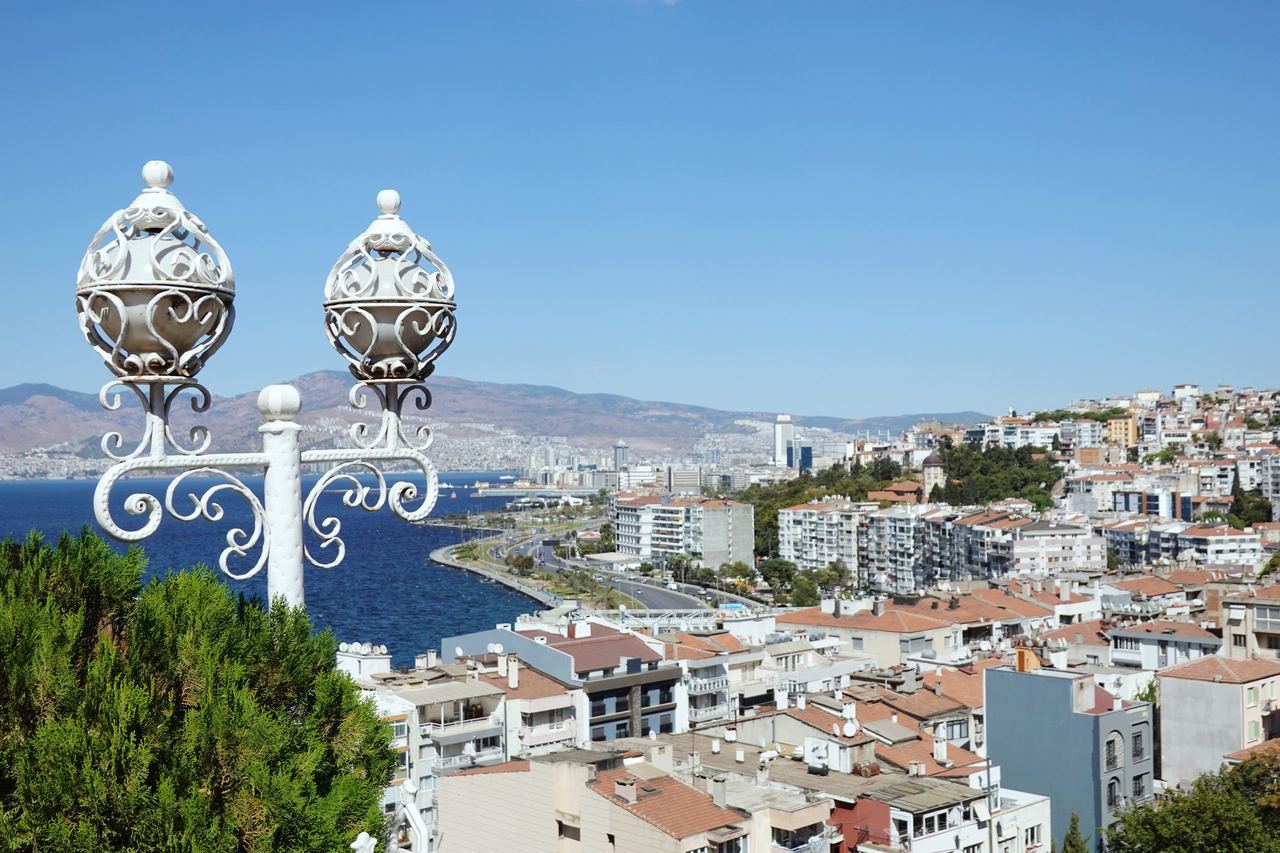
We left Bursa early in the morning by bus, heading to Izmir, where we planned to spend some time exploring the city and visiting a couple of ancient sites.
Bus terminals in Turkish cities are usually located on the outskirts, which means means passengers have a longer journey to reach them. Nevertheless, travelling by bus is one of the most convenient ways to get around Türkiye.
Arrival to Izmir
We arrived at Izmir's bus terminal around noon and, as it was once again outside the city, took a local bus to our accommodation near Basmane train station.
Izmir is a huge city, with a population of approximately 3.5 million. Its outskirts, and actually many other parts of the city, looked rather run-down, quite different from what we had seen in Bursa. Our hotel was also in a somewhat unusual neighbourhood, right next to a street bazaar. Nevertheless, the locals seemed friendly, and we never felt unsafe. Luckily, our hotel was also very nice and comfortable, which was a big plus.
After settling in, we went for a short walk through the bazaar towards the city's best-known, and perhaps almost only, major attraction: the Clock Tower. Kemeraltı Bazaar (Kemeraltı Çarşısı) is a little simpler than the ones in Istanbul, but also somewhat cheaper. There is a mosque, Şadırvanaltı Mosque, in the middle of the bazaar, with a beautiful ablution fountain right outside.
The Clock Tower is the city's main tourist attraction. It stands in the middle of Konak Square, close to the sea. Built in 1901, it is 25 metres tall and combines Ottoman and Western architectural styles. It is actually quite pretty, especially atmospheric when flocks of pigeons circle around it.
For our first meal, we had some köfte (Turkish meatballs) and Dávid's favourite, Adana kebab. We tried them at a small restaurant in the bazaar, Bergama Köftecisi, and both dishes were excellent.
Visiting the ancient city of Ephesus
On our second day in Izmir, we headed to Basmane station to catch a train to Selçuk and visit the nearby ancient city of Ephesus. The direct train journey with Turkish Railways takes around an hour and a half.
Ephesus is one of the best-known and most visited ancient sites in Türkiye. It is quite extensive, with many well-preserved and beautifully restored monuments. The site is located near Selçuk, a small town. Apparently, there are dolmuş minibuses running to the North Entrance from the main road, although we couldn't find them. We actually wanted to use the South Entrance anyway, so we decided to walk, which took around 30–40 minutes, with relatively little elevation gain. The South Gate is at a higher elevation than the northern one, so we could walk downhill through the site.
In recent years, visiting Türkiye's major historical attractions has become extremely expensive. What is even more surprising is that admission for international visitors can be almost ten times higher than for locals. A ticket to Ephesus costs €40 per person for foreigners, and even at the ticket counter, they seem to have a few tricks up their sleeves. We didn't explicitly say that we didn't need an audio guide, so it was added to our tickets automatically. Since the admission price is displayed in euros, while the audio guide is priced in Turkish lira, and the final payment has to be made in lira, the whole thing was rather confusing. We paid and hoped for the best, only to realise later, back at our accommodation, that we had been overcharged. After reading about similar experiences, we understood what had happened.
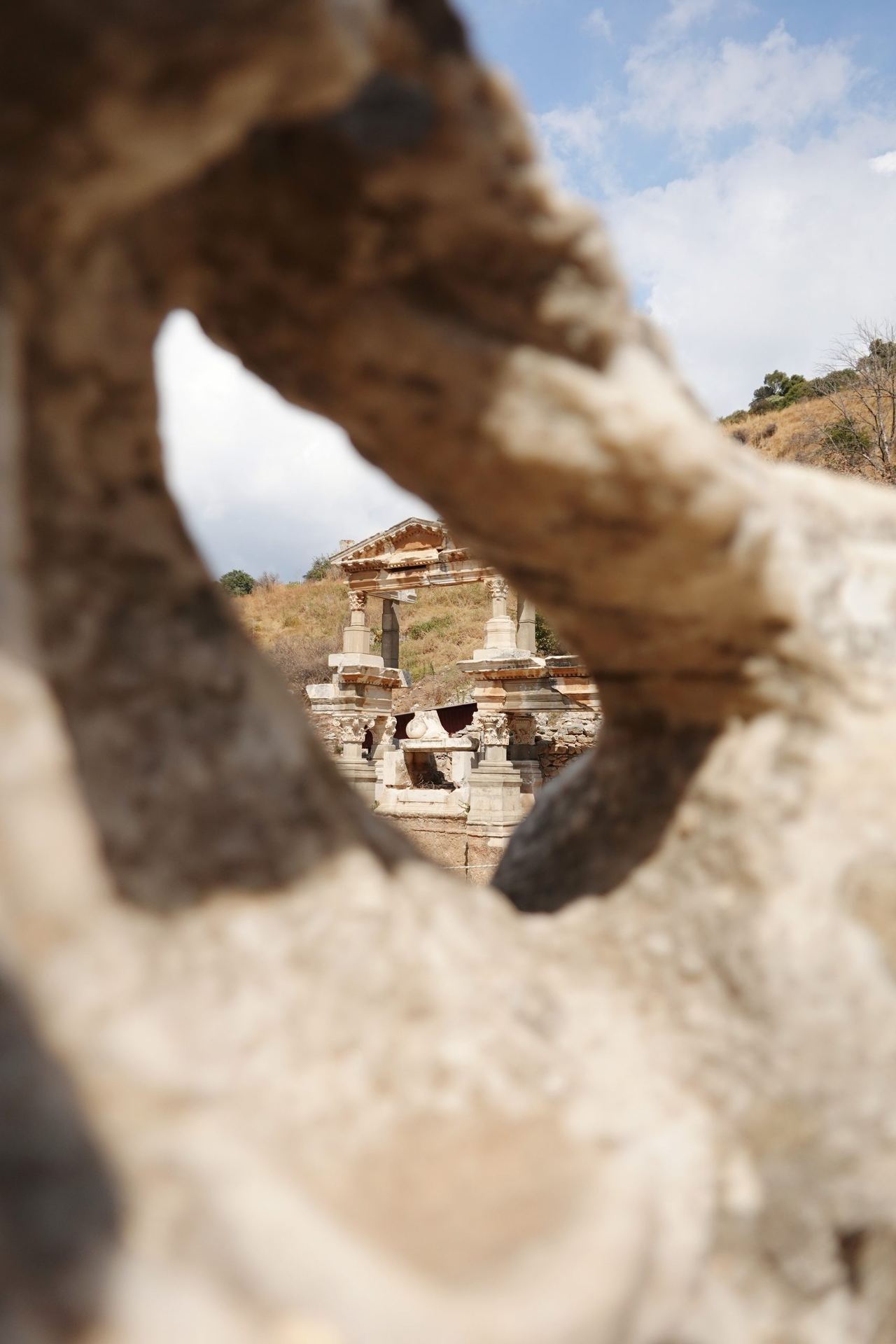
Putting this experience aside, Ephesus is definitely worth a visit. It was once an important port city, but its ruins now lie inland, in a valley, as the Mediterranean coastline gradually shifted away. Founded in the 10th century BCE, it eventually became an important Greek and Roman city and the capital of the Roman province of Asia. Its importance was once compared to that of Rome, and it was also a major centre of the cult of Artemis. The Temple of Artemis, one of the Seven Wonders of the Ancient World, once stood nearby.
The main monuments in Ephesus, following the route from the South Gate to the North Gate, include the Odeon, a smaller Roman theatre, Curetes Street, lined with beautifully reconstructed landmarks, and the two most famous attractions: the Library of Celsus and the Great Theatre.
Many of these buildings once played important roles in the city's cultural, political and educational life, but today only their façades or a few columns remain.
We really enjoyed exploring the ancient remains: the columns, stone sculptures, mosaics and, of course, the reconstructed façade of the Library of Celsus, where we spent quite some time simply admiring it. The Great Theatre was under construction at the time of our visit, so we could see it only from afar.
There is also an experience museum on the site, essentially an immersive cinema experience about the history of the city. It was a fun addition to the visit.
After leaving the ancient site, we walked back to Selçuk, as we still had plenty of time before our train, which eventually departed for Izmir with a considerable delay.
One day in Izmir
Our full day in Izmir started the following morning with another ancient city: Smyrna. Located close to the modern city centre, it is considered the predecessor of Izmir, which takes its name from it. It was once a Roman metropolis, allegedly the birthplace of Homer, and one of the seven cities of Asia mentioned in the Book of Revelation. Today, the remains of the Roman Agora and its water supply system can still be seen here. We really liked this site. It was close to our hotel and considerably smaller, and cheaper to visit, than Ephesus. The reconstructed water system is particularly impressive, and it is fun to explore the area.
For lunch, we went to Ayşa, a Bosnian-Turkish buffet restaurant in Kemeraltı Bazaar. The owner was born in Bosnia and eventually settled in Türkiye, where she decided to combine the two cuisines in her restaurant. There was a huge selection of creamy sauces, salads, dolmas, böreks, noodles, and grilled and stuffed vegetables. We could hardly decide what to try.
On our way to the seaside, we passed the Clock Tower once again before following the waterfront promenade towards the historic elevator, Asansör. It is a fun, free public lift, and from the top you get beautiful views over the city's coastline.
We had heard that Izmir's Alsancak district was worth visiting for its lively atmosphere and local feel, so we headed there by tram after visiting the historic elevator.
We especially wanted to check out a couple of bakeries, as Krisztofer loves baked goods. At the first one, Alsancak Dostlar Fırını, we tried boyoz, a fluffy pastry typical of Izmir, usually served with an oven-baked egg. Next, we visited Zeynel Ergin Gevrek Fırını, where we got some gevrek, Izmir's version of simit. It is slightly slimmer and crunchier.
The district itself was also pleasant, and we particularly liked the traditional houses with enclosed balconies tucked away in the side streets.
Izmir probably won't become our favourite city in Türkiye, as we found it lacking a particularly pleasant atmosphere. However, we enjoyed the food, and it makes a good base for visiting Ephesus and other nearby ancient sites.
Heading to Pamukkale
The following day, we left Izmir by bus once again, heading to Denizli and Pamukkale. After arriving at Denizli's bus terminal, we changed to a dolmuş minibus for the short journey to the nearby village of Pamukkale.
After checking into our accommodation shortly after noon, we headed straight to Pamukkale's main attraction: the travertine pools. The enormous white hillside is world-famous, but, as we had initially thought, it is not made of salt. Instead, it consists of travertine, a type of limestone deposit. The mineral-rich water flows down the hillside, leaving behind white deposits that gradually form the characteristic terraces and pools. Today, the water flow is artificially controlled to preserve the landscape and prevent the formations from disappearing.
At the entrance, they tried to overcharge us again, but this time we were on our guard and paid the correct amount. We only realised on the spot that we were supposed to walk up the hill barefoot. It seemed rather strange at first, as water flows across the ground and the surface looks slippery, but it was actually quite rough underfoot. In the end, we really enjoyed this little barefoot walk alongside the pools, with water running across the path. You can even enter some of the pools, although they are quite shallow, with water reaching roughly knee height. The elevation gain is also modest, so it is more of a pleasant walk than a proper hike.
The biggest surprise was discovering that there is an entire ancient city at the top of the hill: Hierapolis. It was once an important Roman city, built around the thermal springs whose waters still flow down the hillside today. There are numerous ruins to explore, along with a few beautifully reconstructed monuments. One of them is the Antique Pool, where you can still swim today. We only had a look, as we were more interested in the Ancient Theatre, which has been beautifully restored. From there, we walked up to the Necropolis, enjoying great views over Hierapolis and the surrounding landscape. Finally, we reached the far end of Frontinus Street, once the city's main thoroughfare. It is approximately 1.5 km long and 14 metres wide, and features two impressive gates, the Latrina (Roman public toilets), as well as the remains of the Agora and the Basilica.
We also spent some time wandering around the hilltop, admiring the travertine terraces while enjoying the setting sun.
In the evening, we had some pide and lahmacun at a small restaurant close to our hotel. It had been a busy day, but Pamukkale and Hierapolis were definitely worth our time.
Heading to our next destination
After four days exploring Türkiye’s western coast, we decided it was time for a little rest, so we headed to the Mediterranean Antalya.
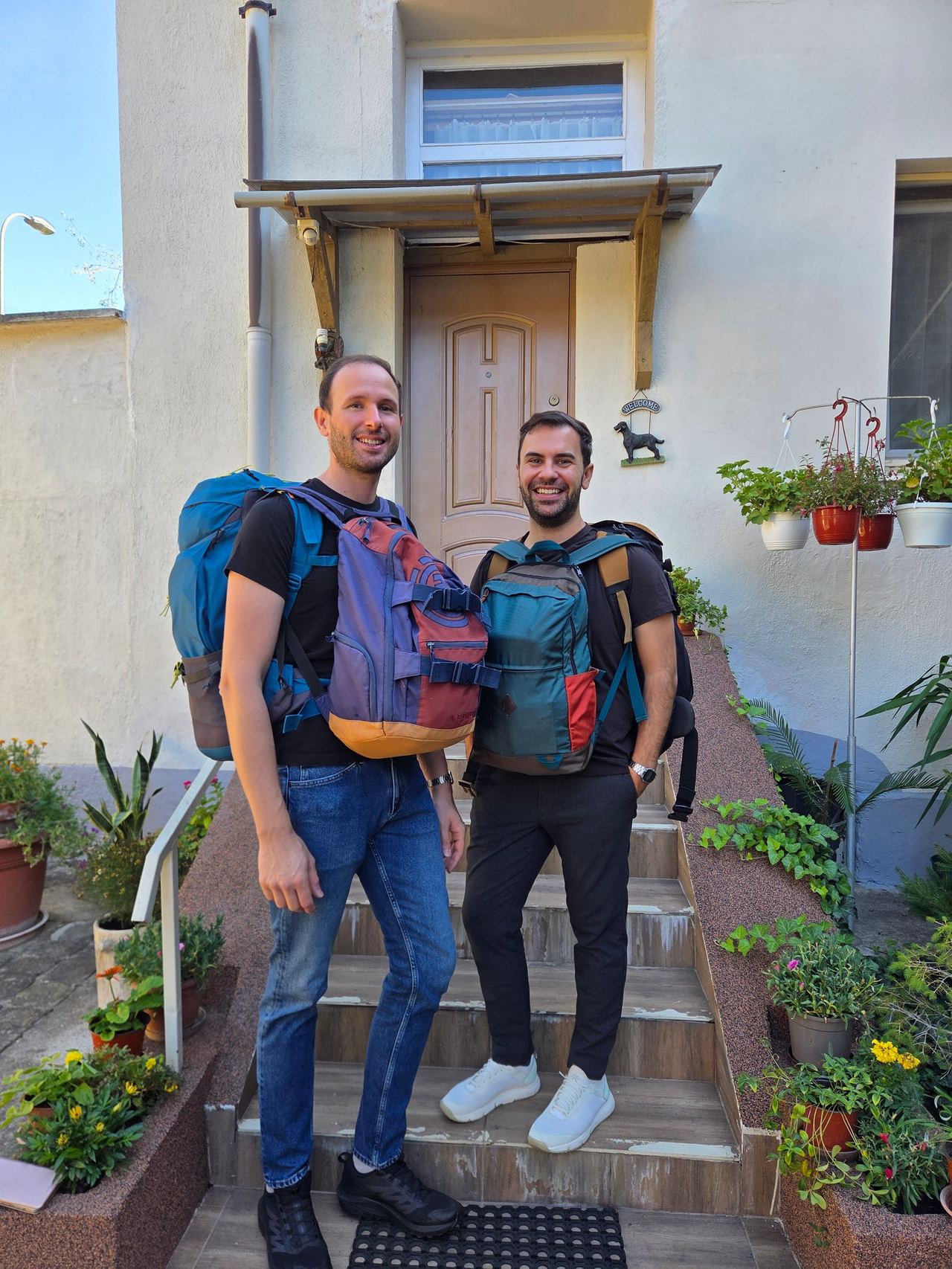
More from Türkiye
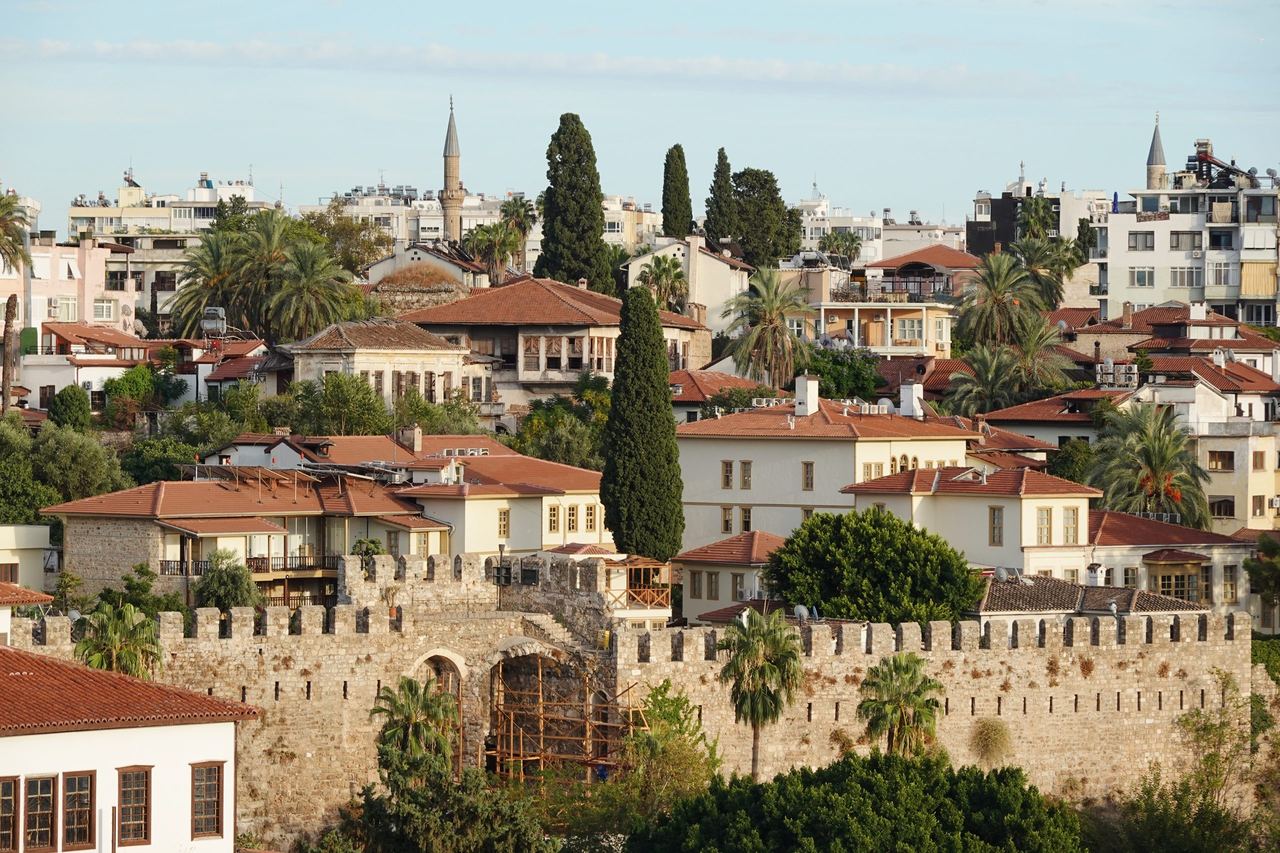
Türkiye · Blog
World Trip Diary #4: Antalya
Antalya was our third most important destination in Türkiye, after Istanbul and Ephesus. We wanted to enjoy the Mediterranean coast before summer came to an end, so we spent three days in Antalya, exploring the city and the nearby beach of Çıralı.
20 November 2026
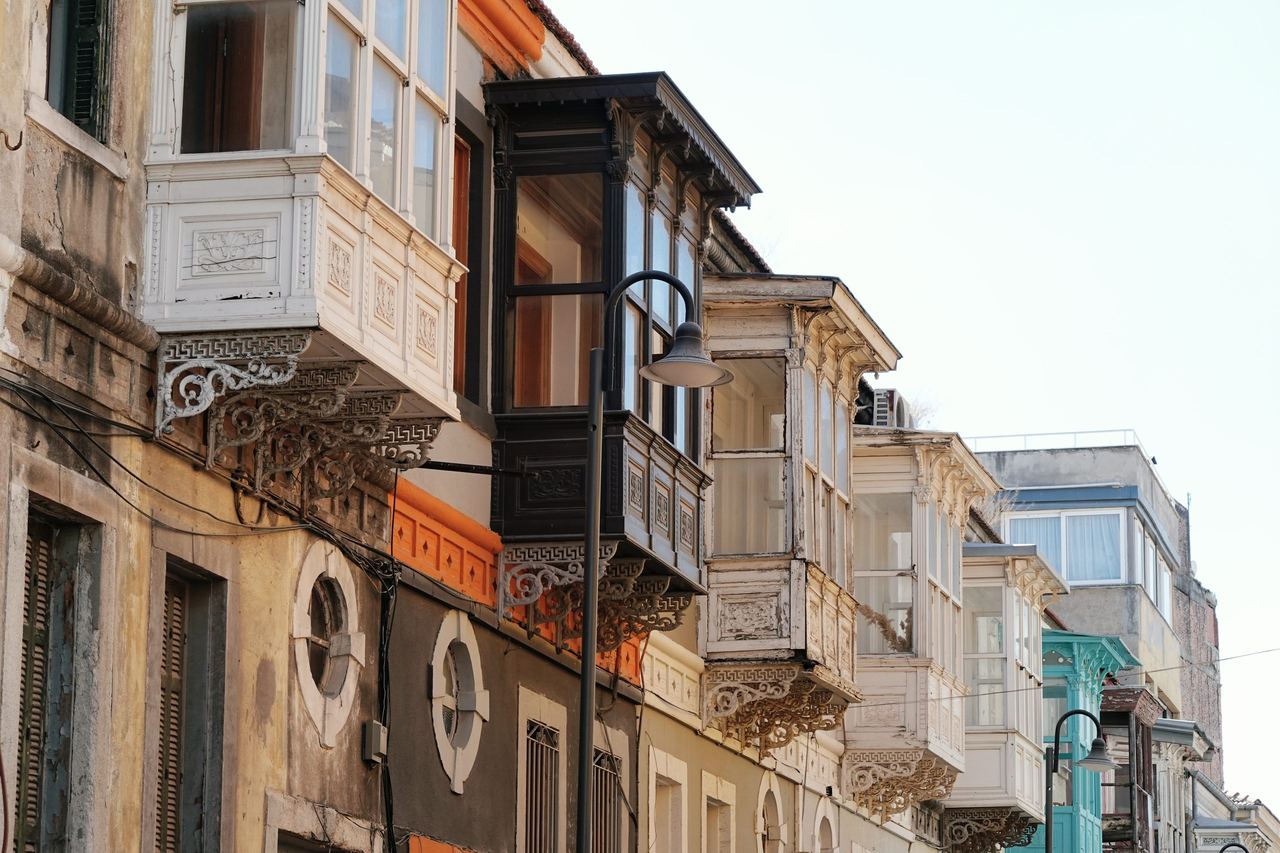
Türkiye · Tips & Guides
One Day in Izmir: What to See, Eat and Do
Izmir is Türkiye's third-largest city, it has a few interesting sights, a lively bazaar, some excellent local food and a pleasant seaside promenade. In one day, you can visit the main tourist attractions, eat some good local food, and even visit an ancient city.
11 November 2026
Türkiye · Tips & Guides
Ephesus: What to See and How to Visit the Ancient City
Ephesus is one of the best-known and most impressive ancient sites in Türkiye. It is easy to visit from nearby Izmir, and there is a lot to see at this extensive archeological site.
11 November 2026